February 23, 1906 – Flaming Kansas Gas Well makes Headlines –
A small town in southeastern Kansas found itself making headlines when a natural gas well erupted into flames after a lightning strike. The 150-foot burning tower could be seen at night for 35 miles.
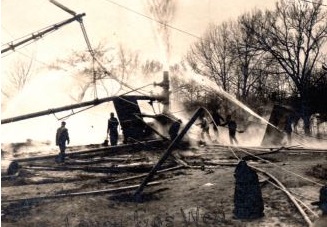
Firefighters struggled to subdue the 1906 well at Caney, Kansas. Photo courtesy Jeff Spencer.
Drilled by the New York Oil and Gas Company, the well became a tourist attraction. Newspapers as far away as Los Angeles regularly updated their readers as technologies of the day struggled to extinguish the highly pressurized well, “which defied the ingenuity of man to subdue its roaring flames.”
A Denver publishing company sold postcards of the blazing Caney well, which took five weeks to smother using a specially designed and fabricated steel hood. Learn more in Kansas Gas Well Fire.
February 23, 1942 – Japanese Submarine shells California Oil Refinery
Less than three months after the start of World War II, a Japanese submarine attacked a refinery and oilfield near Los Angeles. The shelling caused little damage but created the largest mass sighting of UFOs ever in American history.
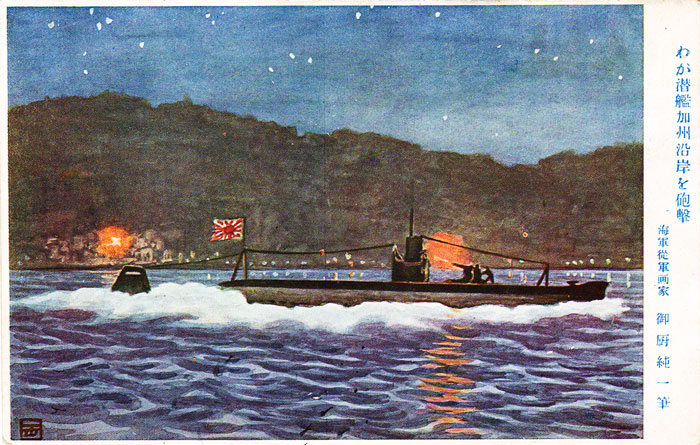
A Japanese postcard of Imperial Navy submarine I-17 shelling the oil refinery at Ellwood, California, north of Santa Barbara. The shelling continued for 20 minutes. Image courtesy John Geoghegan.
The Imperial Japanese Navy submarine I-17 fired armor-piercing shells at the Bankline Oil Company refinery in Ellwood City, California. The shelling north of Santa Barbara continued for 20 minutes before I-17 escaped into the night. The first Axis attack on the continental United States resulted in UFO sightings, mass hysteria, and the “Battle of Los Angeles.”
Learn more in Japanese Sub attacks Oilfield.
February 24, 1938 – First Nylon Bristle Toothbrush
The Weco Products Company of Chicago, Illinois, “Dr. West’s Miracle-Tuft” toothbrush went on sale — the first to use synthetic nylon developed three years earlier by a former Harvard professor working at a DuPont research laboratory in New Jersey.
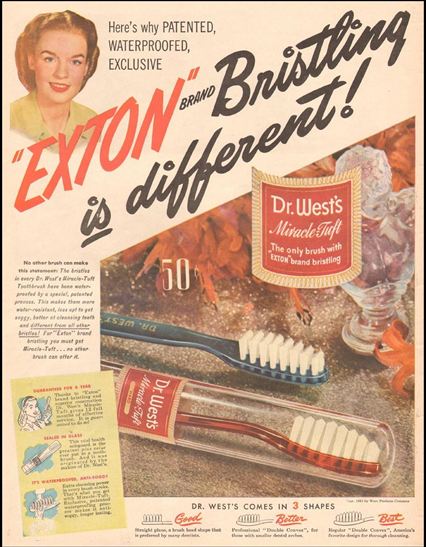
August 1938 Life magazine advertisement for “Dr. West’s Miracle Tuft” — the first nylon bristle toothbrush.
“Until now, all good toothbrushes were made with animal bristles,” noted a 1938 Weco Products ad in Life magazine. “Today, Dr. West’s new Miracle-Tuft is a single exception. It is made with EXTON, a unique bristle-like filament developed by the great DuPont laboratories, and produced exclusively for Dr. West’s.”
Guaranteed for “no bristle shedding” and selling for 50 cents ($10.96 in 2025 dollars), the toothbrush became the first commercial use of nylon.

February 25, 1918 – Pawnee Bill’s Oklahoma Oil Companies
As World War I neared its end, Gordon William “Pawnee Bill” Lillie entered the oil business in Yale, Oklahoma. Despite not being as famous as his Wyoming friend Col. William F. “Buffalo Bill” Cody, Lillie was a widely known showman and promoter of his state.
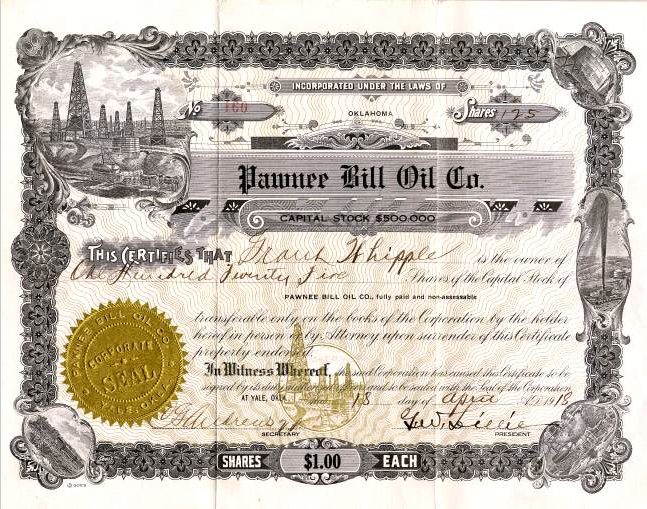
Pawnee Bill Oil Company operated a refinery in Yale, Oklahoma, after World War I. Some stock certificates are collectible, but most are preserved as family keepsakes.
During World War I, the Pawnee Bill Oil Company operated a refinery in Yale and leased 25 railroad tank cars. After the war, reduced demand for refined petroleum products forced the company to operate at half capacity as other Oklahoma refineries began closing.
Although his oil exploration company remained, Pawnee Bill had to shut down his Yale refinery in March 1921. A decade earlier, friend and fellow western showman Col. William Cody had unsuccessfully searched for Wyoming petroleum wealth (see Shoshone Oil Company).
Learn more in Pawnee Bill Oil Company.
February 25, 1919 – Oregon enacts First Gasoline Tax
Oil was selling for just $2 a barrel when Oregon enacted the one-cent gas tax to be used for road construction and maintenance. It was the first U.S. state to impose a gasoline tax. Less than two months later, Colorado and New Mexico followed Oregon’s example.
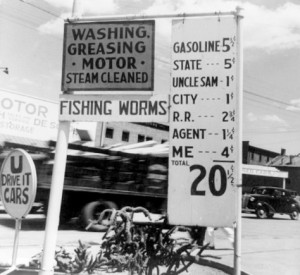
A circa 1930s service station owner explains why gas costs 20 cents a gallon in this Library of Congress photo.
By 1930, every state would add a gasoline tax of up to three cents per gallon. Faced with a $2.1 billion federal deficit, President Herbert Hoover tacked on another one-cent-per-gallon federal excise tax in 1932.
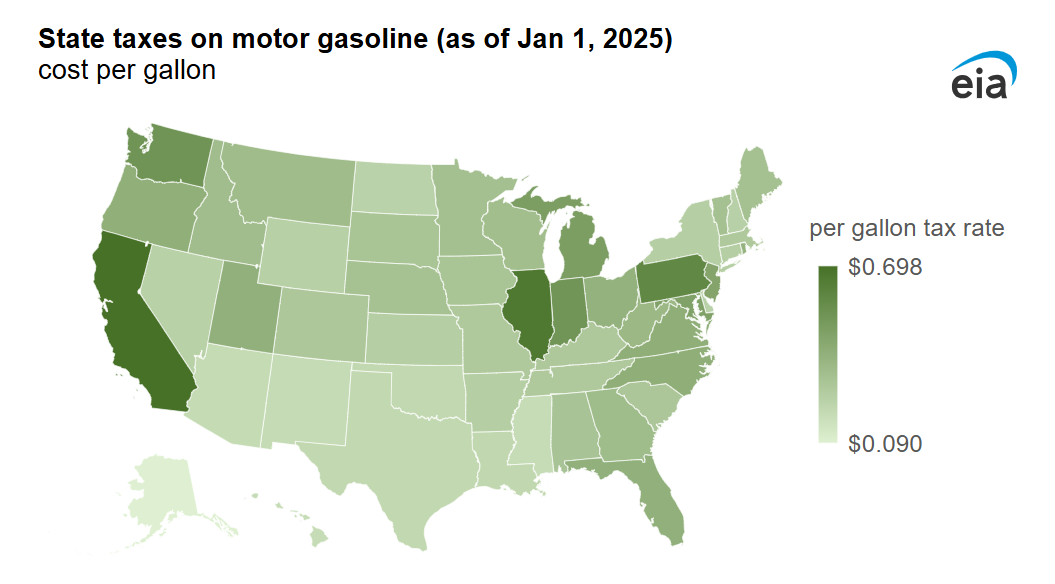
National average tax rates have remained steady, with gasoline taxes increasing in seven states and decreasing in six, according to the Department of Energy.
In August 2024, federal taxes included excise taxes of 18.4 cents per gallon on gasoline and 24.3 cents per gallon on diesel fuel, according to the Energy Information Administration (EIA). State-imposed gasoline taxes have varied from a low of 8.9 cents per gallon (Alaska) to a high of 69.8 cents per gallon (California). The federal tax has not changed since 1993.

February 25, 1926 – Wyatt Earp’s California Oil Wells
A Kern County, California, oil well invested in by former lawman Wyatt Earp began producing 150 barrels of oil a day, confirming his belief in the field five miles north of Bakersfield. As early as 1901, drilling by the Shasta Oil Company had stirred local excitement, but the company went bust after three dry holes. In July 1924, Getty Oil Company began drilling on the Earp lease.
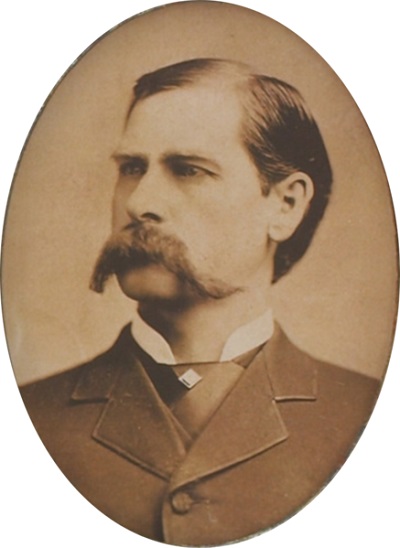
Wyatt Earp, circa 1887, about 39 years old.
“Old Property Believed Worthless for Years West of Kern Field Relocated by Old-Timer,” declared the San Francisco Examiner, describing Earp, 75, as the “pioneer mining man of Tombstone.” The newspaper also reported, “Indications are that a great lake of oil lies beneath the surface in this territory.”
Working on his memoirs, Earp turned over management of his oil properties to his sister-in-law, and his wife noted, “I was in hopes they would bring in a two or three hundred barrel well. But I must be satisfied, as it could have been a duster, too.”
Learn more in Wyatt Earp’s California Oil Wells.
February 27, 1925 – Congress passes Osage Indians Act
As a result of murders and a “reign of terror” in the Osage Nation, the U.S. Congress passed the Osage Indians Act of 1925, prohibiting non-Osages from inheriting headrights of tribal members possessing more than one-half Osage blood. The Osage people’s sudden wealth from oil royalties (see Million Dollar Auctioneer) had brought criminal conspiracies to the Oklahoma Indian Reservation, with dozens of Osage killed for the headrights to their land.
February 27, 1962 – California Voters approve Offshore Drilling
Voters in Long Beach, California, approved the “controlled exploration and exploitation of the oil and gas reserves” underlying their harbor south of Los Angeles. The city’s charter had prohibited drilling there since a 1956 referendum, but advances in technology offered new and environmentally sensitive opportunities to exploit an additional 6,500 acres of the Wilmington oilfield.

Los Angeles Association of Professional Landmen members toured THUMS in 2017. Photo courtesy LAAPL.
Four artificial islands were soon constructed at a cost of $22 million by a consortium of companies called THUMS: Texaco (now Chevron), Humble (now ExxonMobil), Union Oil (now Chevron), Mobil (now ExxonMobil) and Shell Oil. The islands in 1967 were named Grissom, White, Chaffee, and Freeman in honor of lost NASA astronauts. Occidental Petroleum purchased THUMS in 2000.
Eventually operated by the California Resources Corporation, the four “Astronaut Islands” are designed to appear to be occupied by upscale condominiums, thanks to Disneyland architect Joseph Linesch, whose integration of oil production structures the Los Angeles Times described as “part Disney, part Jetsons, part Swiss Family Robinson.”
Learn more in THUMS – California’s Hidden Oil Islands.
February 28, 1935 – DuPont Chemist invents Nylon
A former Harvard professor working in a DuPont research laboratory discovered the world’s first synthetic fiber, the petroleum product nylon. After experimenting with artificial materials for more than six years, Professor Wallace Carothers created a long molecule chain — a stretching plastic. The inventor earlier discovered neoprene (commonly used in wetsuits).
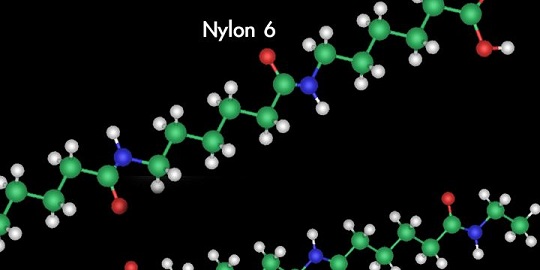
Carbon, hydrogen, and oxygen atoms strung in a chain create manmade fibers. Each molecule contains six carbon atoms.
Carothers produced the fibers when he formed a polymer chain using a process to join individual molecules. Each molecule consisted of 100 or more repeating units of carbon, hydrogen and oxygen atoms, strung in a chain. DuPont patented nylon in 1935, but it was not revealed until 1938.
Originally called “Fiber 66,” the polyamide resulted from 12 years and $27 million in research. Several marketing names were considered for the “artificial silk” before nylon was chosen. The first commercial use was for toothbrush bristles. After World War II, nylon hosiery for women would make a fortune for the Delaware chemical company. Learn more in Nylon, a Petroleum Polymer.
February 28, 1982 – Getty Museum becomes Richest in World
Following years of legal battle by his relatives, the J. Paul Getty Museum in Los Angeles became the most richly endowed museum in the world after receiving a $1.2 billion bequest left to it by oil billionaire J. Paul Getty, who died in 1976.
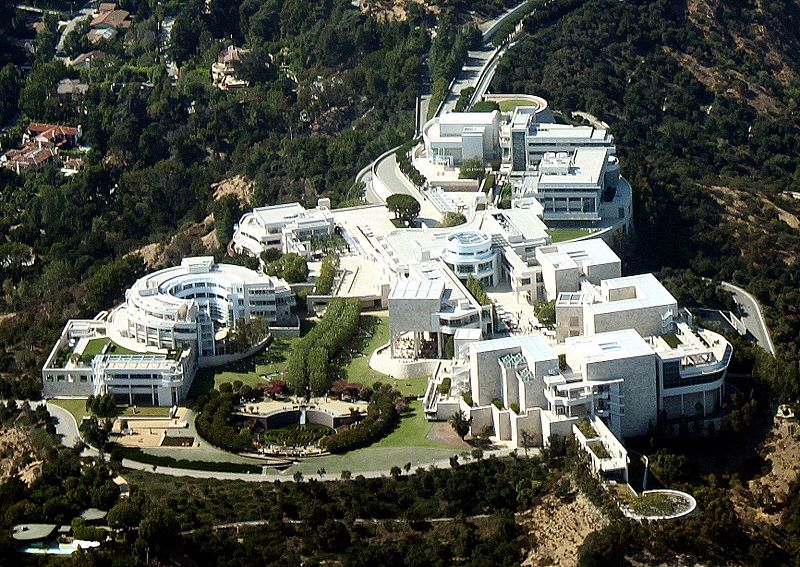
The J. Paul Getty Museum opened in Los Angeles in 1954. The museum’s art collection is housed at the Getty Center (above in 2009) and the Getty Villa on the Malibu coast.
After working in his father’s oilfields in Oklahoma, Getty founded his first oil company in Tulsa and drilled the Nancy Taylor No. 1 well near Haskell, where oil and natural gas production began in 1910. Getty’s oil wealth philanthropy also established the Getty Conservation Institute and the Getty Research Institute, according to the J. Paul Getty Trust.
March 1, 1921 – Halliburton improves Well Cementing
Erle P. Halliburton patented his “Method and Means for Cementing Oil Wells,” improving a key oilfield technology. “It is well known to those skilled in the art of oil well drilling that one of the greatest obstacles to successful development of oil-bearing sands has been the encountering of liquid mud, water, and the like during and after the process of drilling the wells,” he noted in his patent application.
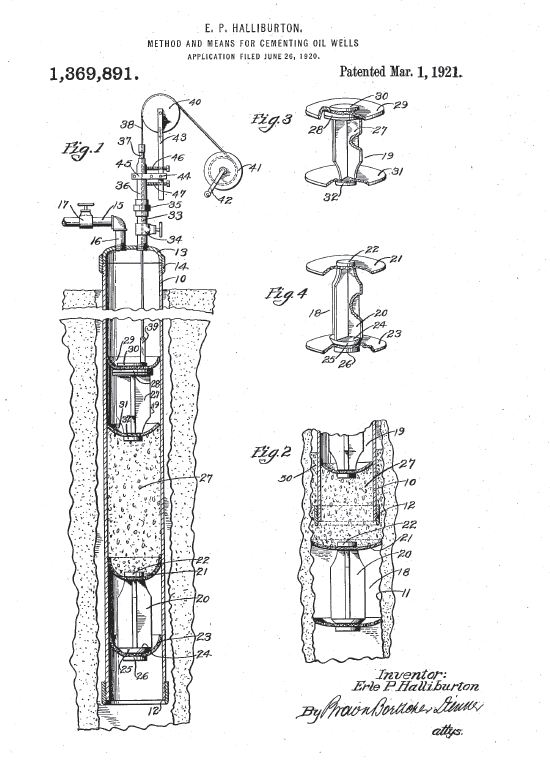
The Halliburton 1921 cementing process isolated geologic zones while protecting casing integrity.
Halliburton’s well cementing process isolated downhole zones, guarded against collapse of the casing, and allowed control of the well, helping to protect the environment. His patent application noted that typical oil production, “hampered by water intrusion that required time and expense for pumping out…has caused the abandonment of many wells, which would have developed a profitable output.”
In March 1949, Halliburton Oil Well Cementing Company and Stanolind Oil completed the first commercial application of hydraulic fracturing at a well near Duncan. Learn more in Halliburton cements Wells.
March 1, 1921 – Houdini patents Improved Diving Suit
As early offshore technologies evolved from piers to platforms to pioneering underwater operations, commercial divers faced many challenges and hazards while drilling and completing wells. Magician and daredevil Harry Houdini came up with a way to help these intrepid deep-sea roughnecks escape from their cumbersome suits. The world-famous escapologist invented a diving suit with a quick-release mechanism, which received a U.S. patent (No. 1370316).
_______________________
Recommended Reading: Caney, Kansas: The Big Gas City (1985); The Battle of Los Angeles, 1942: The Mystery Air Raid
(2010); Enough for One Lifetime: Wallace Carothers, Inventor of Nylon (2005); Pawnee Bill: A Biography of Major Gordon W. Lillie
(1958); Wyatt Earp: The Life Behind the Legend
(2012); Black Gold in California: The Story of California Petroleum Industry
(2016); Du Pont Dynasty: Behind the Nylon Curtain
(1984); The Great Getty: The Life and Loves of J. Paul Getty – Richest Man in the World
(1986); Erle P. Halliburton, Genius with Cement
(1959). Your Amazon purchases benefit the American Oil & Gas Historical Society; as an Amazon Associate, AOGHS earns a commission from qualifying purchases.
_______________________
The American Oil & Gas Historical Society (AOGHS) preserves U.S. petroleum history. Please support AOGHS to help maintain this energy education website, a monthly email newsletter, This Week in Oil and Gas History News, and expand historical research. Contact bawells@aoghs.org. Copyright © 2026 Bruce A. Wells.. All rights reserved.